Peer-Reviewed Proof

Is Huel Healthy?

In collaboration with our independent researchers at Aelius Biotech, experts in conducting human research trials, we put Huel to the test in a scientific trial.

An image of Julian Hearn, the founder of Huel, with his arms crossed and smiling.
  • SCIENTIFICALLY TESTED
  • 22 BIOMARKERS TRACKED
  • REAL PEOPLE, REAL RESULTS
  • 4-WEEK TRIAL
  • INDEPENDENTLY RESEARCHED
  • NUTRITION THAT WORKS

Study Snapshot

20

Adults

4

Weeks

100%

Huel Users

22

Biomarkers

Measuring what matters

We analysed 22 key biomarkers from participants' blood samples to evaluate the impact of consuming only Huel (original Powder) on micronutrient status, dietary intake, and broader health markers.

Read the full paper here

Inside the study

Huel is a nutrition brand that makes convenient, plant-based foods and drinks designed to support a balanced lifestyle. Many of our products — such as Huel Powders, Hot & Savoury meals, and Ready-to-drink meals — are nutritionally complete, meaning they provide the right balance of protein, essential fats, carbohydrates, fibre, and 26 essential vitamins and minerals.

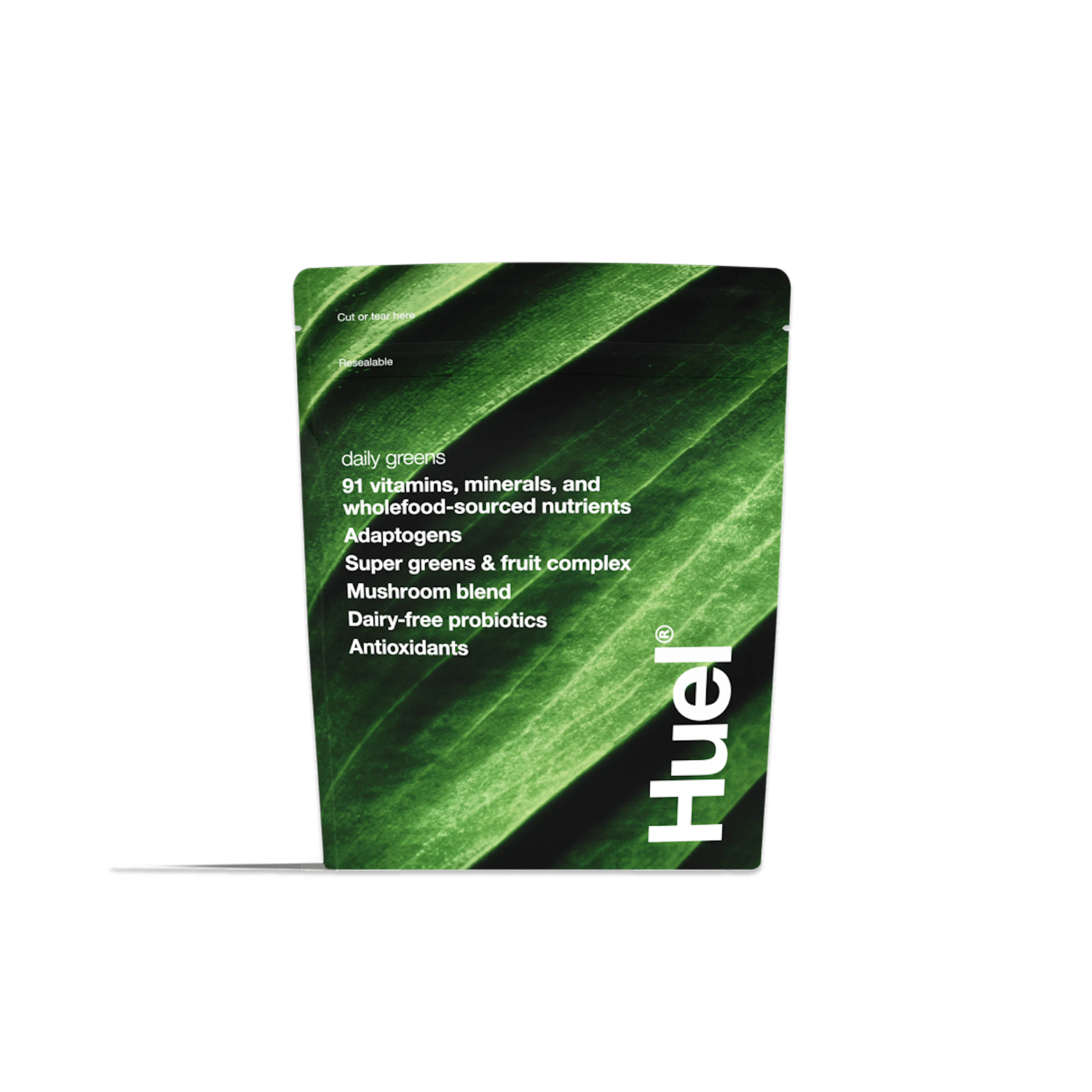
We also offer products that support specific goals, including Daily Greens vitamin drinks, functional energy drinks, and high-protein snack bars. All Huel products are built on the same principle: smart, convenient nutrition made for real life.

The goal was to answer a simple question: Is Huel healthy?

Working with independent researchers at Aelius Biotech, we examined how eating only Huel affected key health markers in the body.

Over four weeks, participants replaced all their meals with Huel Powder v3.0 so researchers could track changes in blood sugar, cholesterol, vitamin and mineral levels, and body composition. In total, 22 different biomarkers were measured, including iron, vitamin D, cholesterol, and HbA1c — an indicator of long-term blood sugar control.

Huel’s designed to replace your most inconvenient meal, not every meal. But for this study, we kept things controlled to ensure reliable results.

Thirty healthy adults were enrolled in the study, and twenty completed the full four weeks (eleven females and nine males, with a median age of 31 years).

After a baseline week tracking their usual diets, participants switched to a 100% Huel diet, consuming only Huel Powder v3.0, water, black coffee, and non-citrus teas. Researchers measured blood samples, BMI, body composition, and visceral fat both before and after the trial. Each participant acted as their own control, allowing any changes to be directly attributed to Huel.

The results showed significant improvements across several health markers, including lower cholesterol, improved blood glucose control, and higher levels of key vitamins and minerals.

Body composition

Four weeks on Huel led to significant changes in key measures linked to body composition and metabolic health.

In a four-week controlled study where Huel was the sole source of nutrition, participants saw an average 6% reduction in BMI.

At the start of the study, 63% of participants had a BMI above the healthy range.

While BMI isn’t a perfect measure of body fat, as muscle mass can influence it, it remains a useful indicator for most people.

VAT is the fat stored around internal organs, and higher levels are linked to increased cardiometabolic risk [16].

After four weeks of Huel:

  • 13 participants saw a reduction in VAT
  • 4 showed no change
  • 3 showed an increase

This means 65% of participants reduced their VAT, a positive marker for metabolic health.

Visceral Adipose Tissue (VAT) - Graph

Waist circumference is a useful indicator of abdominal fat and cardiometabolic risk. It is also an indirect marker of insulin resistance [12-15].

After four weeks of Huel:

  • 16 participants reduced their waist circumference
  • 2 showed no change
  • 2 showed an increase

Overall, 80% of participants saw a reduction [16].

Waist Circumference - Graph

Total cholesterol and non-HDL cholesterol (which includes LDL, or "bad" cholesterol [2-3]) are known risk markers for coronary heart disease and diabetes. The lower these numbers, the lower the risk of developing these conditions.

Baseline values showed that seven out of the 19 participants started with high total cholesterol. By the end, both markers decreased over the four-week study.

These improvements likely reflect both:

  • Huel's nutritional profile (low in saturated fat, contains plant sterols)
  • The reduction in body weight observed during the trial

Lowering LDL is associated with a reduced risk of heart disease.

HbA1c levels improved after four weeks, suggesting better average blood glucose control. This is a key marker linked to long-term metabolic health.

The authors suggested that acerola cherry powder in Huel v3.0 may help moderate blood sugar responses after carbohydrate digestion, contributing to improved glycaemic control [4].

Micronutrient wins

Four weeks on Huel led to significant improvements in key micronutrient levels. Here’s what changed:

Vitamin B12 levels increased significantly after four weeks of Huel v3.1 Powder.

One participant who began the study with a B12 deficiency reached healthy levels by week five. This improvement is especially positive for people following a plant-based diet, as vitamin B12 is typically found in animal products.

Vitamin B12 levels increased significantly from week 0 to week 5, rising by 18% (375.9 → 443.8 pmol/L). Huel v3.1 Powder provides 32% NRV per 100g serving.

Selenium levels increased significantly following four weeks of Huel v3.1 Powder.

One participant who started below the recommended range reached an optimal level by the end of the trial. Selenium levels increased from week 0 to week 5, rising by 21% (1.16 → 1.40 µmol/L). Huel v3.1 Powder contains 36% of the recommended daily intake per 100g serving.

Selenium supports immune function and helps protect cells from oxidative stress.

Both iron and haemoglobin levels increased significantly after the four-week Huel diet.

This is noteworthy because plant-based iron (non-haem iron) is typically less well absorbed than iron from animal sources [6-8], and compounds in oats can reduce absorption further[9]. The likely explanation is Huel's high vitamin C content (75% of the recommended daily intake per 100 g), as vitamin C helps enhance iron absorption[10-11]. Healthy haemoglobin levels support oxygen transport, energy, and cognitive function

Vitamin D levels increased significantly compared to baseline.

At the start of the study, more than half of the participants (58%) had suboptimal vitamin D levels. By week five, most had moved toward the recommended range. Huel v3.1 Powder provides 80% of the recommended daily intake of vitamin D per 100 g, and vitamin D is important for immune health, bone, and muscle function [5].


Some participants began the study with values above recommended levels; these reduced toward the optimal range by week five. Huel v3.1 Powder provides 23% (vitamin A), 25% (vitamin E), and 35% (potassium) of the recommended daily intake per 100 g serving.

Russ Cook - The Hardest Geezer - sitting on a bench in a black tracksuit, opening a shaker of Huel

The verdict: Huel is healthy.

Our clinical study shows that four weeks on Huel can lead to meaningful improvements in nutrient status, body composition, and key markers linked to long-term health.

  • Improved micronutrient status
  • Positive changes in body composition
  • Improved metabolic health markers
  • Nutritionally complete, plant-based food

The Board Shaping Huel's Future

The Huel Science Advisory Board is a team of leading experts in nutrition and health, ensuring every Huel product is grounded in the latest scientific research. They help us stay ahead of nutrition trends, drive innovation, and ensure our products deliver real, measurable health benefits.


Build your complete nutrition lineup

Here are some Huel favorites we think you'll love

The science doesn’t stop here

How Huel fits into real life

Huel isn’t designed to be your only source of food. So how does it impact health when eaten twice a day, or even just twice a week, alongside a regular diet? That’s the kind of real-world research we’re exploring next.

The research continues

Nutrition science is constantly evolving, and so are we. We're always reviewing the latest research to understand how Huel can best support your health, and we'll keep sharing what we find.

Why participants ate less

Participants were told to eat enough Huel to maintain weight, but most naturally ate less. This calorie drop likely influenced weight changes. Future research will clarify how much was due to Huel itself versus simply reduced intake.

References

  1. Wilcox MD CP, Stanforth KJ, Williams R, Brownlee IA and Pearson JP , . A Pilot Pre and Post 4 Week Intervention Evaluating the Effect of a Proprietary, Powdered, Plant Based Food on Micronutrient Status, Dietary Intake, and Markers of Health in a Healthy Adult Population. frontiers. 2022.
  2. Baumgartner S, et al. Effects of a Plant Sterol or Stanol Enriched Mixed Meal on Postprandial Lipid Metabolism in Healthy Subjects. PloS one. 2016; 11:e0160396.
  3. Bierenbaum ML, et al. Reducing atherogenic risk in hyperlipemic humans with flax seed supplementation: a preliminary report. J Am Coll Nutr. 1993; 12(5):501-4.
  4. Hanamura T, et al. Antihyperglycemic effect of polyphenols from Acerola (Malpighia emarginata DC.) fruit. Biosci Biotechnol Biochem. 2006; 70(8):1813-20.
  5. Aranow C. Vitamin D and the immune system. Journal of investigative medicine. 2011; 59(6):881-6.
  6. Gregory J. Anderson GDM. Iron Physiology and Pathophysiology in Humans. Humana Totowa, NJ: Springer; 2012.
  7. Beck E. Essentials in Human Nutrition. edition t, (eds). 2012.
  8. Hallberg L. Iron requirements and bioavailability of dietary iron. Experientia Suppl. 1983; 44:223-44.
  9. Minihane AM RG. Iron absorption and the iron-binding and anti-oxidant properties of phytic acid. International Journal of Food Science & Technology. 2002; 37:741-8.
  10. Lane DJ, et al. The active role of vitamin C in mammalian iron metabolism: much more than just enhanced iron absorption! Free Radic Biol Med. 2014; 75:69-83.
  11. Teucher B, et al. Enhancers of iron absorption: ascorbic acid and other organic acids. Int J Vitam Nutr Res. 2004; 74(6):403-19.
  12. Park J, et al. Waist Circumference as a Marker of Obesity Is More Predictive of Coronary Artery Calcification than Body Mass Index in Apparently Healthy Korean Adults: The Kangbuk Samsung Health Study. Endocrinol Metab (Seoul). 2016; 31(4):559-66.
  13. Borruel S, et al. Surrogate markers of visceral adiposity in young adults: waist circumference and body mass index are more accurate than waist hip ratio, model of adipose distribution and visceral adiposity index. PLoS One. 2014; 9(12):e114112.
  14. Alberti KG, et al. The metabolic syndrome--a new worldwide definition. Lancet. 2005; 366(9491):1059-62.
  15. Reeder BA, et al. The association of cardiovascular disease risk factors with abdominal obesity in Canada. Canadian Heart Health Surveys Research Group. Cmaj. 1997; 157 Suppl 1:S39-45.
  16. Ruiz-Castell M, et al. Estimated visceral adiposity is associated with risk of cardiometabolic conditions in a population-based study. Scientific Reports. 2021; 11(1):9121.