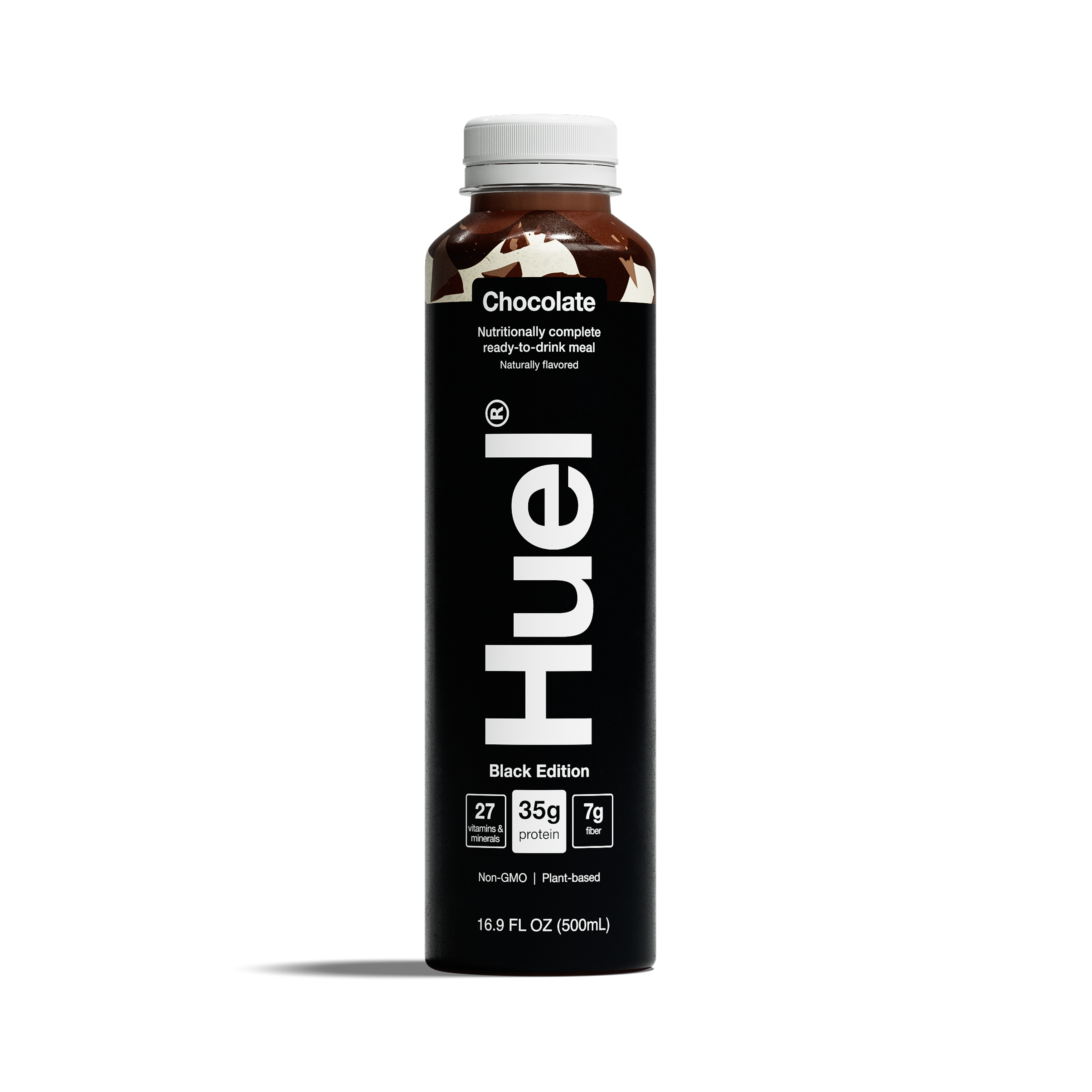

Black Edition Ready-to-drink
High-protein meal shakes
35g protein
400 cal per bottle

One of the more counterintuitive nutritional problems of the modern era is that it's entirely possible to eat more than enough calories and still be malnourished. Not malnourished in the dramatic, visible sense associated with food scarcity — but deficient in the micronutrients that govern how the body functions at a cellular level. This is sometimes called hidden hunger, and it's considerably more widespread than most people realise.
The World Health Organisation estimates that micronutrient deficiency affects more than two billion people globally. What's striking is that a significant proportion of this burden occurs not in low-income populations with insufficient food, but in wealthy countries where caloric abundance coexists with nutritional poverty.
TL;DR: Hidden hunger refers to deficiency in essential vitamins and minerals despite adequate or excess calorie intake. It's driven largely by diets high in ultra-processed foods that supply energy without micronutrients. The consequences are subtle but significant — affecting energy, immunity, cognition, and long-term disease risk. The solution is dietary quality, not quantity.
Calories and nutrition are not the same thing. A calorie is a unit of energy — the capacity of a food to fuel metabolic processes. Micronutrients — vitamins, minerals, and trace elements — are the cofactors, catalysts, and structural components that make those metabolic processes work. You can eat 2,500 calories a day entirely from foods that provide energy while delivering very little of what the body needs to function well.
Ultra-processed foods are the primary mechanism by which this happens. They are, by design, calorie-dense and highly palatable, engineered to override the body's satiety signals and encourage overconsumption. They are also, almost without exception, micronutrient-poor. The processing that makes them convenient and shelf-stable strips or degrades much of the nutritional content present in their raw ingredients. The vitamins and minerals added back through fortification — iron in breakfast cereals, vitamin D in plant milks — partially compensate but don't replicate the full nutritional matrix of whole foods.
In the UK, ultra-processed foods account for more than 50% of caloric intake for the average adult, and higher proportions for children. In the US, the figure is similar. At these levels of consumption, micronutrient gaps become structurally almost inevitable for people who don't actively work against them.
Iron deficiency is the most prevalent micronutrient deficiency globally, affecting an estimated 1.6 billion people. It is most common in women of reproductive age, children, and people following plant-based diets (because non-haem iron from plants is less bioavailable than haem iron from meat). Symptoms — fatigue, reduced concentration, impaired immune function, breathlessness on exertion — are frequently attributed to other causes or dismissed as normal tiredness, which is why iron deficiency anaemia often goes undiagnosed for extended periods.
In northern latitudes, vitamin D deficiency is close to endemic — the NHS estimates that around one in six UK adults have low vitamin D status, and figures are higher in populations with darker skin, older adults, and those who spend limited time outdoors. Because vitamin D is produced primarily through UV exposure rather than diet, no amount of improved food quality fully compensates for insufficient sunlight during winter months without supplementation.
Magnesium is involved in over 300 enzymatic reactions in the body, including energy production, DNA synthesis, muscle and nerve function, and blood glucose regulation. It's found primarily in whole grains, legumes, nuts, and leafy greens — foods that are underrepresented in diets dominated by ultra-processed options. Surveys consistently show that a significant proportion of adults in Western countries consume below the recommended intake, and that subclinical magnesium insufficiency — not full deficiency, but below-optimal levels — is associated with increased fatigue, muscle cramps, sleep disruption, and heightened stress reactivity.
Zinc supports immune function, wound healing, and the production of over 300 enzymes. It's found in meat, shellfish, legumes, seeds, and whole grains. Deficiency is associated with impaired immune response, slow wound healing, and reduced taste and smell acuity. Like magnesium, subclinical insufficiency is more common than overt deficiency in Western populations, and is easily missed in the absence of blood testing.
The B vitamin family — particularly folate (B9), B12, and B6 — are central to energy metabolism, red blood cell production, and neurological function. B12 is found exclusively in animal products, making deficiency essentially universal among strict vegans who don't supplement. Folate is found in leafy greens, legumes, and fortified foods; deficiency is particularly significant in pregnancy, where it increases the risk of neural tube defects.
Hidden hunger produces diffuse, non-specific symptoms that are easy to misattribute. Persistent fatigue, difficulty concentrating, frequent illness, low mood, poor sleep, and slow recovery from exercise can all reflect micronutrient insufficiency — but they can also reflect a dozen other things, which is why they rarely prompt a nutritional investigation.
The longer-term consequences are more serious. Iron deficiency impairs cognitive development in children and productivity in adults. Vitamin D insufficiency is associated with increased risk of osteoporosis, certain cancers, autoimmune disease, and cardiovascular events. Chronic magnesium insufficiency is linked to elevated blood pressure and increased metabolic syndrome risk. These are not speculative associations — they're consistent findings across large epidemiological datasets.
What makes them insidious is the timescale. The damage from years of subclinical micronutrient insufficiency accumulates quietly and becomes apparent only when it's already well-established.
The most effective response to hidden hunger is improving dietary quality — specifically, increasing the proportion of whole, minimally processed foods and reducing reliance on ultra-processed options. This doesn't require a dramatic dietary overhaul. Consistent, modest shifts — more vegetables, more legumes, more whole grains, more oily fish — move the nutritional baseline considerably.
A few targeted additions are worth considering based on common deficiency patterns. Vitamin D supplementation is recommended by the NHS for all UK adults during autumn and winter, and year-round for higher-risk groups. Iron-rich foods are best consumed alongside vitamin C, which significantly increases non-haem iron absorption. Zinc and magnesium are most reliably obtained from seeds, legumes, and whole grains rather than supplements, where absorption is generally superior.
Blood testing — through a GP or private health check — is the only reliable way to identify existing deficiencies, since symptoms are non-specific. For people who eat a restricted diet, follow a plant-based pattern, or have been consistently fatigued without obvious cause, testing is a worthwhile step.
Yes — this is precisely what makes it hidden. Caloric abundance does not prevent micronutrient deficiency. People who eat more than enough calories but predominantly from ultra-processed foods can be simultaneously overweight and deficient in multiple essential nutrients.
How do I know if I have micronutrient deficiencies?
The most reliable method is blood testing, which can be arranged through a GP or a private health service. Symptoms like persistent fatigue, frequent illness, poor wound healing, and hair loss can suggest deficiency but are non-specific enough that self-diagnosis is unreliable.
Supplements address specific deficiencies effectively when the deficiency is confirmed. However, they don't replicate the full nutritional benefit of whole foods, which deliver micronutrients alongside fibre, phytochemicals, and other compounds that interact synergistically. They're most useful as a targeted intervention for identified gaps — vitamin D in winter, B12 for vegans — rather than a substitute for dietary quality.
Fortification helps — it's been particularly effective for iodine, folate, and iron in populations where specific deficiencies were endemic. But it addresses a limited number of nutrients and doesn't compensate for the full nutritional gap produced by diets dominated by ultra-processed foods. It's a floor, not a ceiling.